
The Hidden Risk in Planning Applications: Structure, Clarity and Coordination
Most planning applications don’t fail on the merits of the proposal. They fail on how the proposal is presented. In years of advising on planning matters across the UK, I’ve come to see this as the hidden risk in our profession, one that quietly costs clients time, money and decisions. It rarely appears in lessons-learned notes, yet it shows up in almost every refusal worth reviewing.
Structure: More than just presentation
Planning officers navigate large volumes of documentation under real-time pressure. Validation queues are long, determination periods are tight, and committee reports must withstand legal scrutiny. A well-structured submission tells a clear story: this is the site, this is the proposal, this is why it complies, this is how it responds to constraints.
Officers should be able to lift content straight into their reports. When they can’t, or when key information is buried, duplicated or inconsistently presented, the application stalls. Poor structure obscures otherwise strong proposals and raises the likelihood of delays, re-consultations or even refusal.
Clarity: The difference between confidence and doubt
Ambiguity is one of the biggest hidden risks. A statement that a scheme “broadly complies” with policy opens the door to objection. Inconsistencies between drawings, reports and supporting documents can quickly erode trust.
For example, a minor discrepancy between a planning statement and a transport assessment may trigger disproportionate scrutiny. Clarity is not just about plain language; it’s about alignment. Every document should reinforce a single, coherent story: what is proposed, why it’s acceptable, and how impacts are addressed.
Coordination: The silent success factor
This is where applications most often unravel. Modern planning applications are multidisciplinary by nature. Planners, architects, engineers and consultants all contribute, often under tight deadlines. Without strong coordination, gaps and contradictions emerge.
The risk is not just technical non-compliance but also a loss of confidence from officers and consultees. Effective coordination ensures that inputs are not only complete but mutually supportive. It requires a single point of accountability, rigorous version control, and the discipline to cross-check every figure across every document before submission.
In my experience, it is the single biggest determinant of a smooth application.
A robust submission process will typically include:
- Clear ownership and coordination across the consultant team;
- Rigorous cross-checking between reports and drawings;
- Disciplined version control;
- A concise policy-led narrative; and
- Early identification of consultee concerns and planning sensitivities.
A practical example
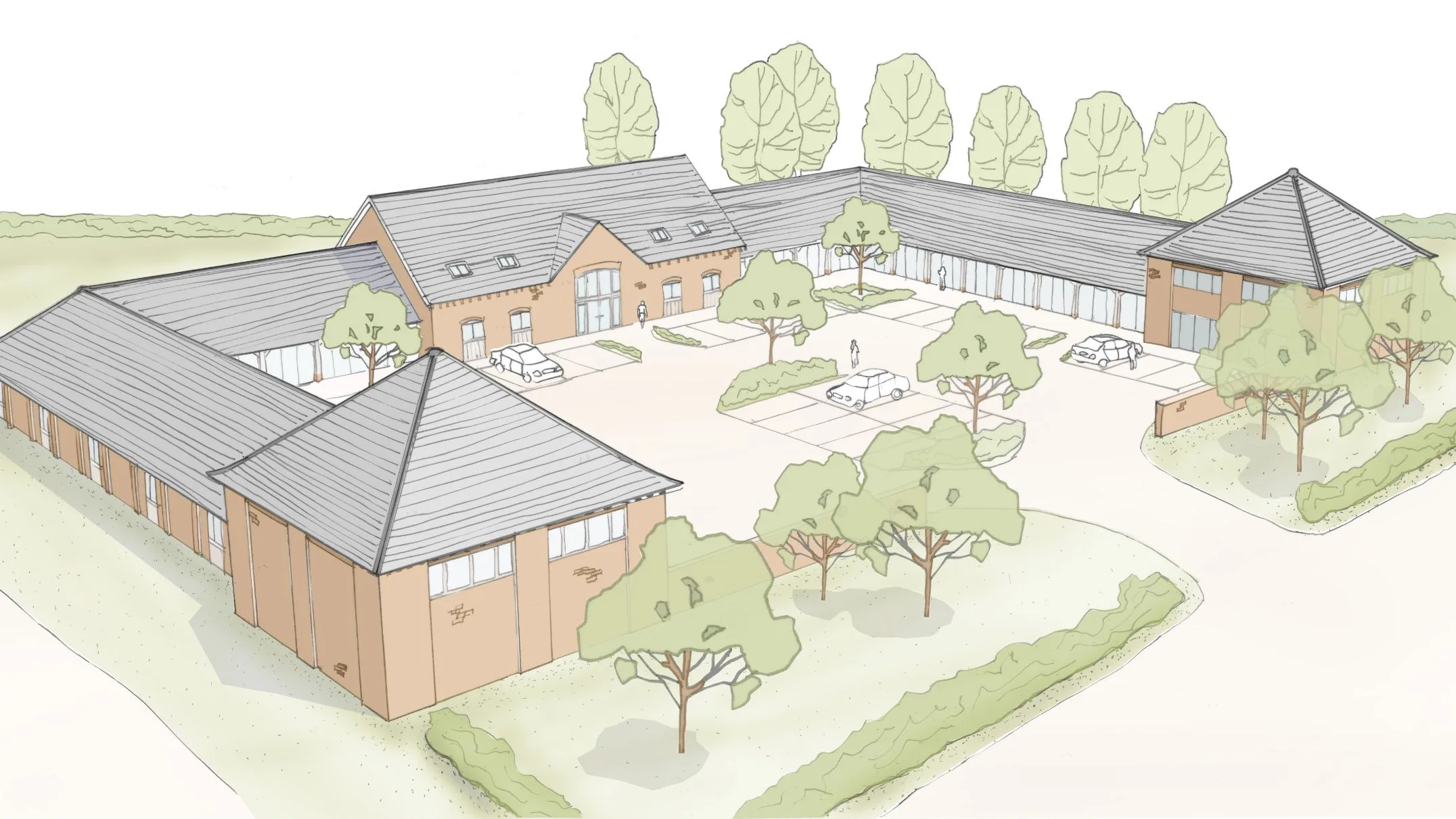
An example of this was WWA’s work at Hideaway Farm, where the site had a long and complex planning history including multiple refused or withdrawn applications and a dismissed appeal. On paper, the principle of development appeared highly constrained. However, by coordinating a clear planning narrative around rural employment, biodiversity net gain, highway improvements and landscape enhancements, the team successfully secured outline planning permission for rural commercial units following extensive officer engagement and negotiation.
The outcome was shaped not simply by the proposal itself, but by how the planning case was assembled, evidenced and communicated throughout the process.
Why it matters now
As schemes grow more complex and local authorities become more resource-constrained, poorly coordinated submissions are no longer given the benefit of the doubt, and there is no “free go” application to fall back on.
Since the Planning Inspectorate’s reforms also took effect on 1 April 2026, the stakes have risen sharply: most appeals now follow the expedited Part 1 written representations procedure, with no new evidence admissible save for narrow exceptions.
In other words, the application is the appeal.
Increasingly, planning success is determined not only by what is proposed but also by how convincingly and coherently it is assembled.
If you’re bringing forward a development and would like to reduce planning risk before submission, get in touch with our planning team to discuss your project.
Related Articles

Draft London Plan 2026 | Older Persons’ Housing Analysis
Read More
How Strong Consultant Relationships Improve Project Delivery
Read More
The role of the architect – forty years of change and what comes next
Read More
Celebrating a Major Milestone at WWA
Read More
Navigating Policy Uncertainty in Older Persons’ Housing
Read More
Reforming Site Thresholds
Read More
Building Safety Levy – another tax on housebuilders
Read More
Devolution in Oxfordshire: One Council or Another Missed Opportunity?
Read More
How can Architectural and Planning Expertise Help Developers in the Supported Housing Market?
Read More