
Winterbourne Medieval Barn
Winterbourne Medieval Barn is a building of national importance, dating from 1342 and is Grade II* listed. The Winterbourne Medieval Barn is an outstanding example of a raised-cruck construction, one of the largest and earliest of its kind. It is unique in being one of the few buildings of the medieval agrarian economy still surviving in England. Working with the Winterbourne Medieval Barn Trust and South Gloucestershire Council, WWA led the transformation of the site and buildings into a heritage centre for the local community.
WWA was appointed as architects and lead consultants for the design, specification, and administration of the building and conservation work on site, which has successfully secured the future of the barn and the wider site for future generations. The completed project revitalises the site as a local heritage centre and venue for weddings, music and theatre performances, a wide range of educational and family activities, and craft workshops for local artists and businesses.
A Heritage-Led Regeneration
The project centred on the restoration and refurbishment of the medieval barn and its associated outbuildings, all owned by the local authority, as part of a wider vision to create a sustainable, community-led heritage destination. The ambition was not only to conserve a nationally significant structure but also to re-establish its role as a focal point for economic and social activity, echoing its historic function within a medieval agrarian settlement.
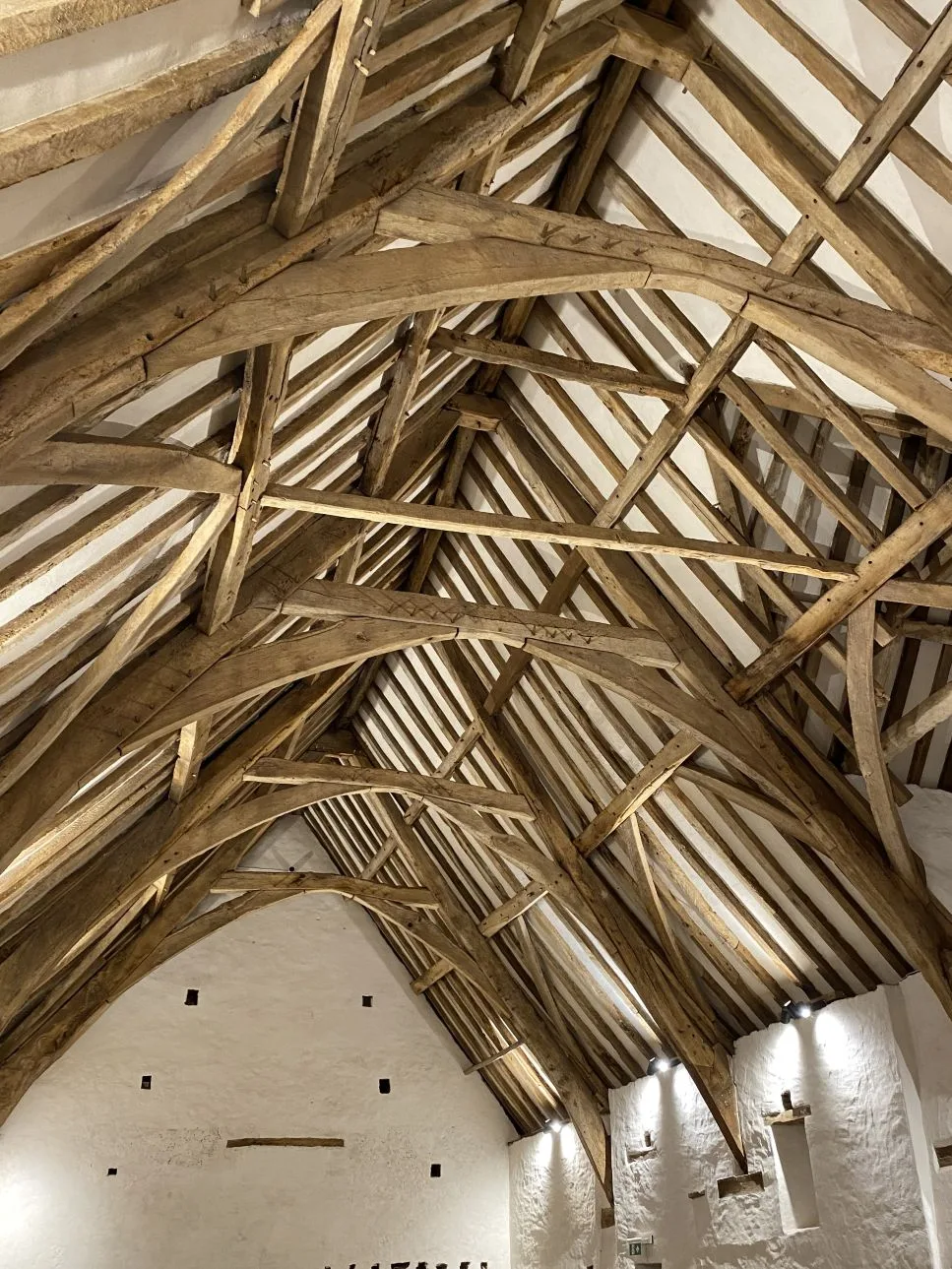
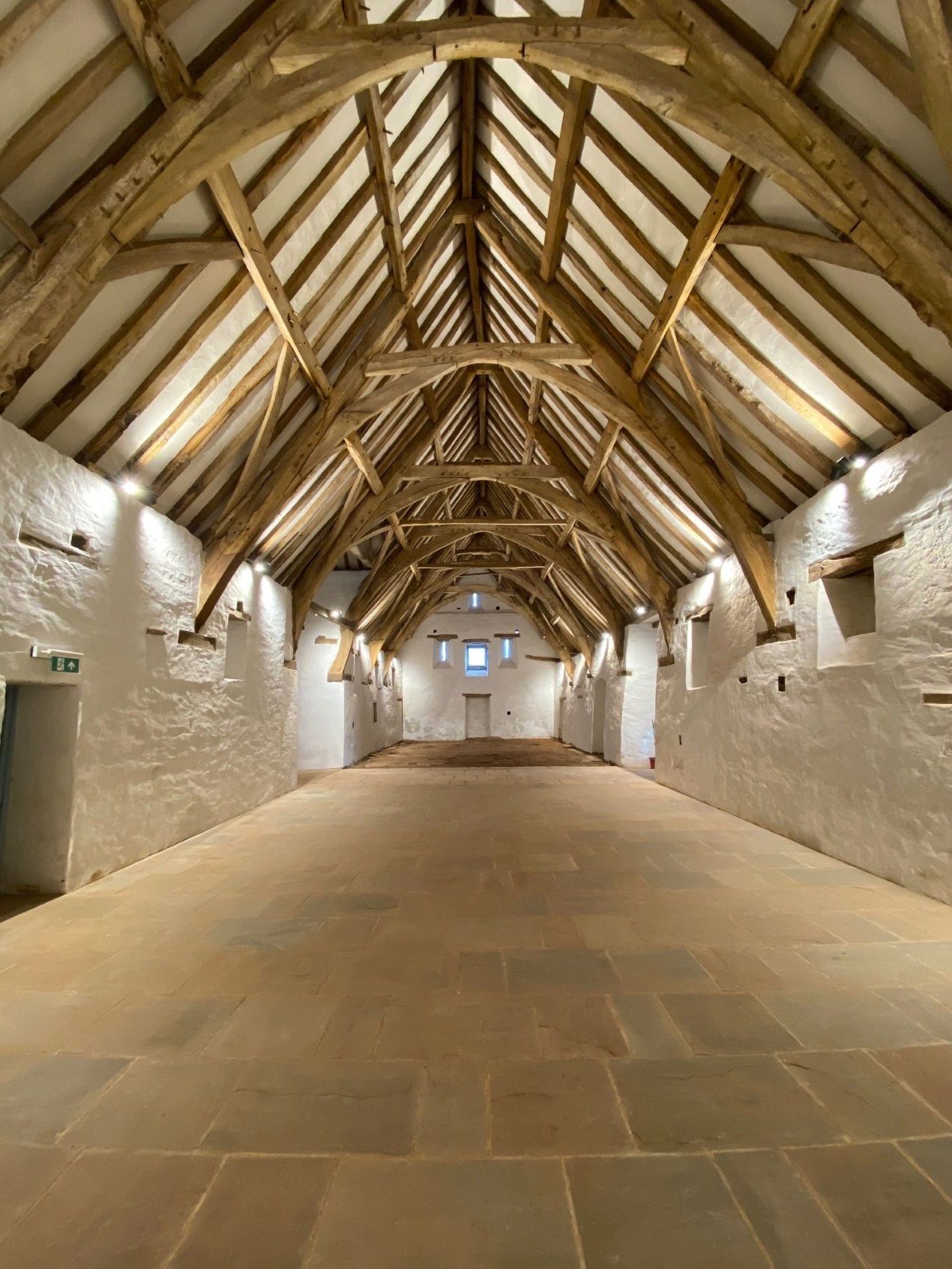
Set within a historically significant group of buildings near the parish church of St Michael, the barn forms part of a remarkably intact manorial landscape. Timber dating has confirmed the structure’s origins in 1342, and its surviving raised-cruck frame, featuring arch-braced collars, saddle stones and a square-set ridge, represents a rare and highly developed example of medieval construction techniques. Despite its reduced form, the barn remains one of the most significant cruck-framed buildings in the region.


Design Approach and Development
From the outset, the design approach was guided by a principle of minimal intervention. The aim was to unlock the site’s potential without compromising the integrity or legibility of the historic fabric. This required a careful balance between conservation, functionality and long-term viability.
A detailed analysis of the building, combined with archival research, revealed evidence of earlier configurations, including a historic south lean-to incorporating a catslide roof. Reinstating this element proved pivotal, enabling improved circulation and connectivity across the site while restoring a lost aspect of the building’s form. This intervention allowed the various spaces within the complex to function cohesively, supporting a diverse programme of uses.
The project evolved through close collaboration with the client, stakeholders, and future users. Consultation helped shape both the spatial design and the operational vision, ensuring that the building could support educational activities, community events, artisan workshops and enterprise initiatives linked to rural skills and crafts.
Conservation in Practice
The site presented significant conservation challenges, not least due to extensive low-quality alterations and unlawful developments accumulated over time. These interventions had compromised both the structural integrity and the readability of the historic fabric.
A key aspect of the project involved the careful removal of these additions, alongside the repair and reinstatement of original materials wherever possible. The conservation philosophy prioritised authenticity, with new work designed to be both sympathetic and clearly legible as part of the building’s ongoing evolution.
The variability of historic construction methods required a highly responsive approach on-site. Differences in mortar types, construction techniques and levels of deterioration demanded close coordination between the design team, conservation officers and specialist contractors. Traditional materials and methods were employed throughout, including breathable lime renders and limecrete flooring, alongside the use of locally sourced air-dried English oak for structural repairs.
Working with Somerset contractor Corbel Conservation, WWA delivered this £1.7 million project on time and on budget—a significant achievement given the complexities of the scheme.
Sustainability and Long-Term Viability
Sustainability was embedded in the project from the outset, with a focus on ensuring the long-term viability of the site through active use and community engagement. The reuse of existing structures preserved embodied energy, while the specification of natural, locally sourced materials supported regenerative construction practices.
Environmental performance was enhanced through targeted interventions, including the integration of insulation within new-build elements to create an efficient thermal envelope. Heating is provided by air-source heat pumps, carefully integrated within the site to minimise visual impact. Ecological considerations were also central to the design, with measures such as bat mitigation informing both the construction process and the site’s long-term management.
The introduction of artisan workshop units within the Cow Byres has further strengthened the sustainability of the project, supporting local businesses and reinforcing the economic resilience of the rural community.
Accessibility and Use
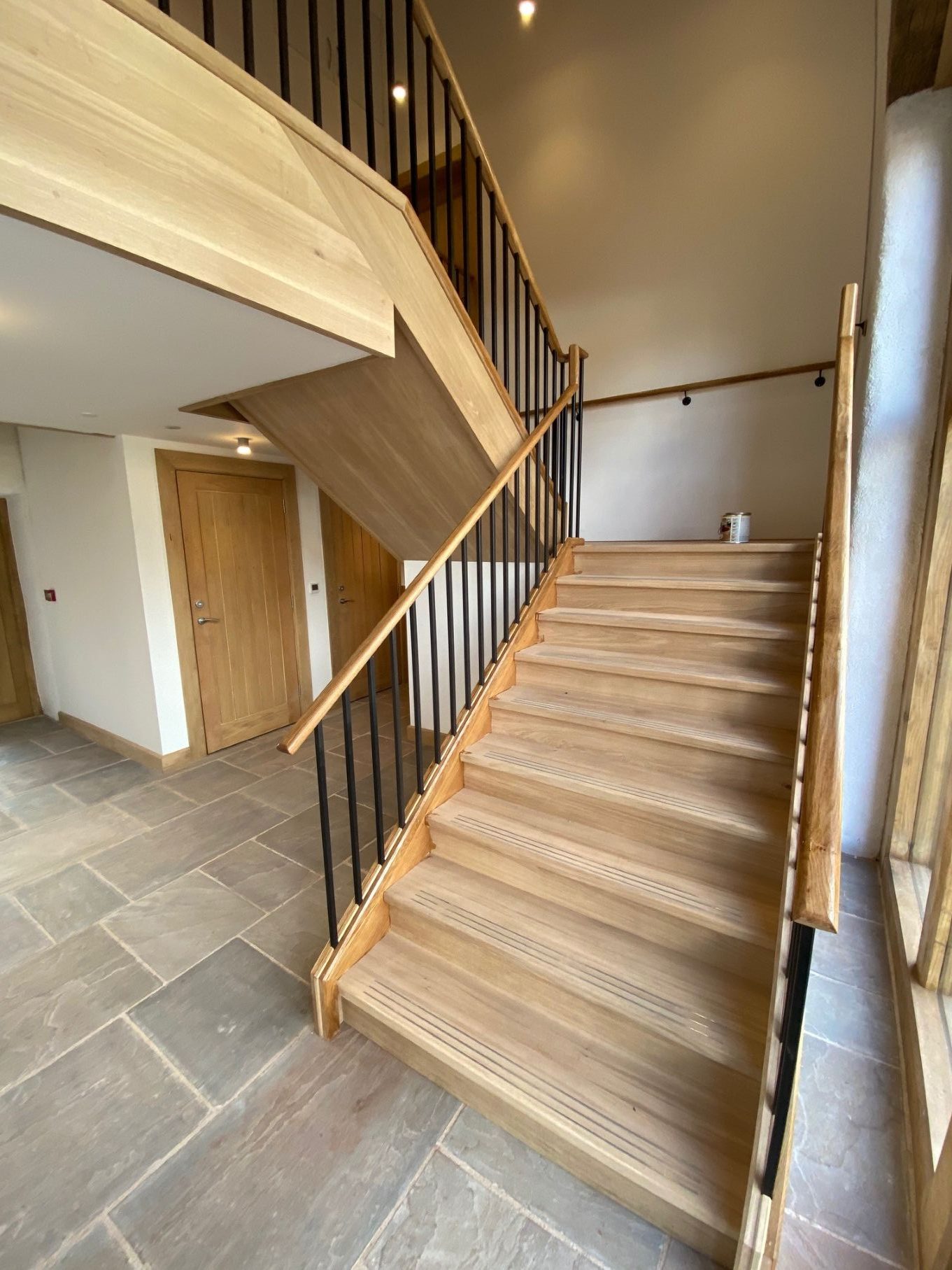
Improving accessibility across a complex, multi-level historic site required a carefully considered approach. The project introduced level access routes, accessible parking and new facilities, while retaining the character and spatial qualities of the original buildings.
Adjustments to floor levels were made selectively, ensuring that the majority of the site’s activities can now be accessed at the ground-floor level. These interventions were designed to integrate seamlessly with the historic fabric, maintaining the authenticity of the user experience while enabling broader public access.
Community Impact
The completed project has re-established Winterbourne Medieval Barns as a vibrant and inclusive community asset. The site now supports a wide range of activities, including educational programmes, exhibitions, performances and community events, attracting both local residents and visitors from across the region.
Extensive consultation with stakeholders, including residents, volunteers and local organisations, informed both the design and the operational strategy. This collaborative approach has fostered a strong sense of ownership and identity, with the site now playing a central role in community life.
The project has also enabled the development of new skills and opportunities through volunteering and participation, contributing to the long-term social and cultural sustainability of the area.
A Continuing Legacy
The restoration of Winterbourne Medieval Barns demonstrates how careful, conservation-led design can secure the future of a nationally significant heritage asset while enabling it to adapt to contemporary use. The project has not only preserved the physical fabric of the site but has also reactivated its role within the community, ensuring its relevance for generations to come.
A particular skill is needed to balance the often-conflicting demands of increasing commercial activity at a historic site such as this, whilst ensuring that the special characteristics that make this site so significant are not harmed by the intensification of use. WWA understands these issues, and the Winterbourne Medieval Barn scheme is the latest project to be successfully delivered by our team of specialist architects and planners, further enhancing our reputation in the heritage sector.
Recognition
Winterbourne Medieval Barns has been recognised for its conservation-led approach and community impact.
Read more in our article: Winterbourne Barns receives a Civic Trust Award
To find out more about other prominent heritage projects that WWA has led, you can follow the link to read our Heritage brochure.
Our Projects
The Unicorn School
View Project
Decarbonising a Historic Oxford Estate
View Project
All Souls College Sustainability and Energy Reduction
View Project
Fairmile Cemetery Columbarium
View Project
All Souls College Façade Restoration
View Project
The Great Barn
View Project
Oakhouse Barns
View Project
Ferry Cottage
View Project
Roborough House
View Project